
How Did Goose Die in Top Gun? The Flat Spin, Explained
SHARE THIS POST:
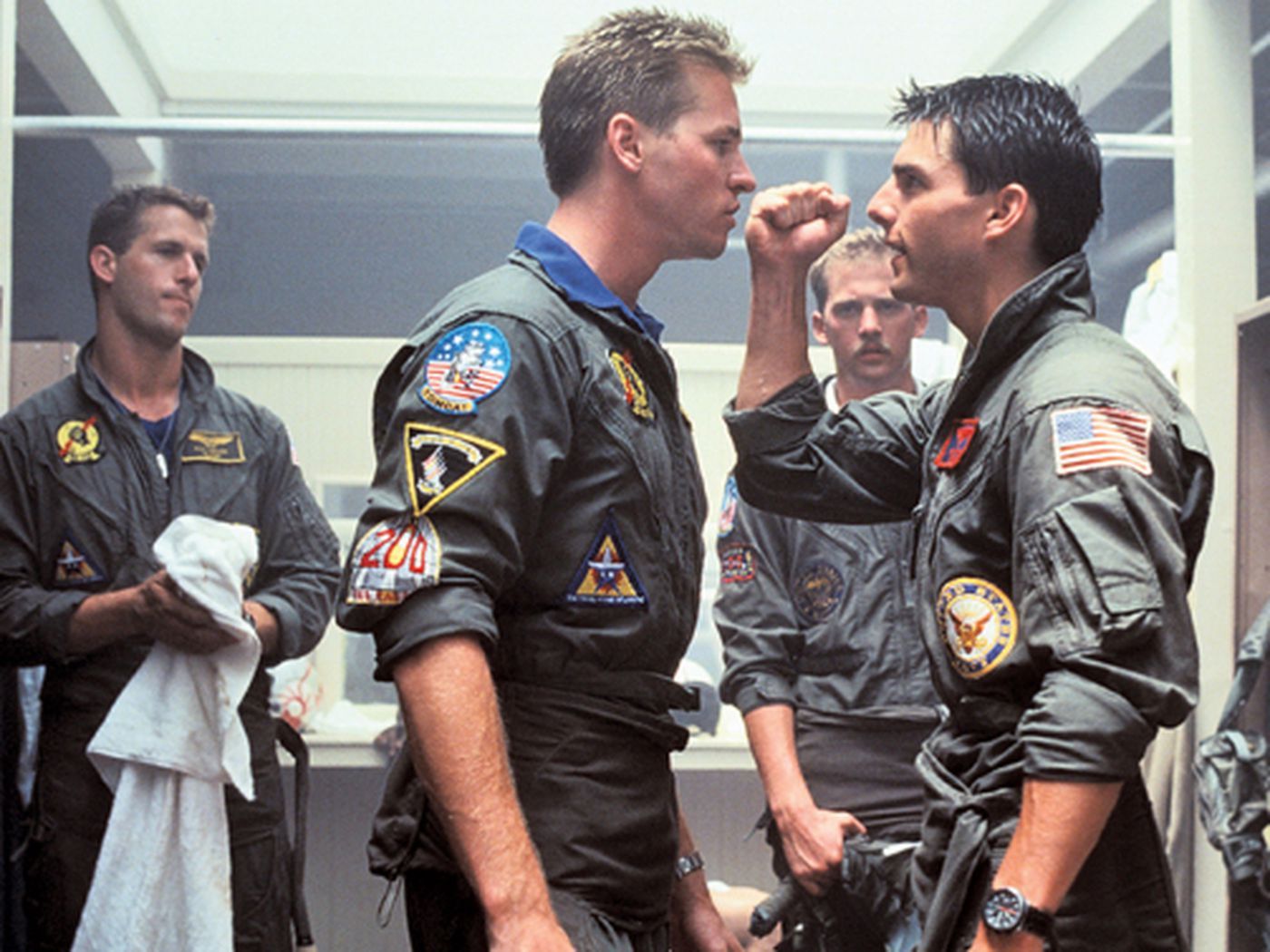
Forty years on, it is still the scene people bring up first: the jet wash, the engines flaming out, the Tomcat rotating flat against the horizon, and Goose hitting the canopy. If you have ever wondered what actually happened in that sequence, whether it could happen for real, and what a flat spin even is, here are the real answers, from people who fly spins on purpose for a living.
What Is a Flat Spin?
Every spin starts with a stall: the wings exceed their critical angle of attack and stop producing useful lift. If the airplane is also yawing when it stalls, one wing stalls more deeply than the other and the aircraft begins to autorotate, corkscrewing toward the ground. In a normal spin the nose points steeply down, air keeps flowing over the controls, and a trained pilot can recover with a standard procedure.
A flat spin is the nastier cousin. The aircraft rotates with its nose near the horizon, almost level, falling like a spinning leaf. Because the airplane is moving down rather than forward, very little air flows over the rudder and elevator, which is precisely the problem: the control surfaces you need to stop the rotation barely work. Flat spins are usually driven by weight distribution, especially a center of gravity that sits too far aft, and in some aircraft recovery from a developed flat spin is effectively impossible.
How Did Goose Die in Top Gun?
In the film, Maverick's F-14 flies through the jet wash of Iceman's aircraft during a training engagement. The disturbed air flames out an engine, the asymmetry throws the Tomcat out of control, and it enters a flat spin the crew cannot stop. Maverick orders the ejection. The canopy is jettisoned but fails to clear cleanly, and when Goose's seat fires, he strikes the canopy and is killed. Maverick survives and is pulled from the ocean, blaming himself for the rest of the movie and a good chunk of the sequel.
Hollywood takes liberties with aviation constantly, but this scene is uncomfortably close to the real manual. The F-14's spin behavior was measured and documented, and the numbers the Navy published read like the storyboard: a developed flat spin took about two seconds per turn, lost roughly 700 feet of altitude every rotation, and reached yaw rates up to 180 degrees per second. The crew would be pinned by outward g forces strong enough to make reaching the ejection handle a fight, which is the one part a camera cannot show.
Could It Really Happen? The F-14 and the Flat Spin
Yes, and the Navy knew it. Fighter jets concentrate their heavy components, engines, fuel, and equipment, along the centerline of the fuselage. In a spin, that mass distribution creates a nose-up inertial moment that pushes the rotation toward a flat attitude. The F-14's flight manual, called NATOPS, was blunt about the consequence. Its guidance stated that consistent successful flat spin recovery procedures had never been demonstrated, and instructed crews to eject once a flat spin was confirmed, adding that the decision should not be delayed.
A departure from controlled flight caught in the first turn or two was recoverable. A fully developed flat spin was an ejection, by the book. So the movie's sequence of events, flameout, flat spin, ejection, is not dramatic invention. It is roughly what the manual told real Tomcat crews to do, compressed for the screen. No single documented F-14 accident has been identified as the direct inspiration for the scene.
Art Scholl: The Pilot Top Gun Is Dedicated To
The flat spin claimed a real life during the making of the film, and it is a story worth knowing. Art Scholl was one of the best aerobatic pilots in American history: a national aerobatic champion, a member of the US aerobatic team for nearly a decade, and Hollywood's go-to aerial cameraman. On September 16, 1985, he was filming spin footage for Top Gun in a camera-equipped Pitts S-2 over the Pacific near Carlsbad, California.
Scholl entered a spin for the shot and did not recover. His radio calls were reported as "I've got a problem" and, moments later, "I've really got a problem." The aircraft went into the ocean, and neither Scholl nor the Pitts was ever recovered. The investigation could not determine a definitive cause. If you watch to the end of the credits, the film carries the line: "This film is dedicated to the memory of Art Scholl."
Feel Real Aerobatics, With a Pro in CommandLoops, rolls, and yes, controlled spins, flown in a purpose-built aerobatic plane over Las Vegas with a veteran pilot. No experience needed. |
How Pilots Actually Recover From a Spin
Student pilots learn spin recovery with the acronym PARE. Power to idle, because engine thrust can pitch the nose up and keep the spin flat. Ailerons neutral, because rolling inputs change the angle of attack on each wing and usually make things worse. Rudder full opposite to the rotation, the one control that directly fights the spin. Elevator forward, to break the stall that started everything. Height is life in a spin: recovery eats altitude fast, which is why intentional spins are only flown with plenty of sky below.
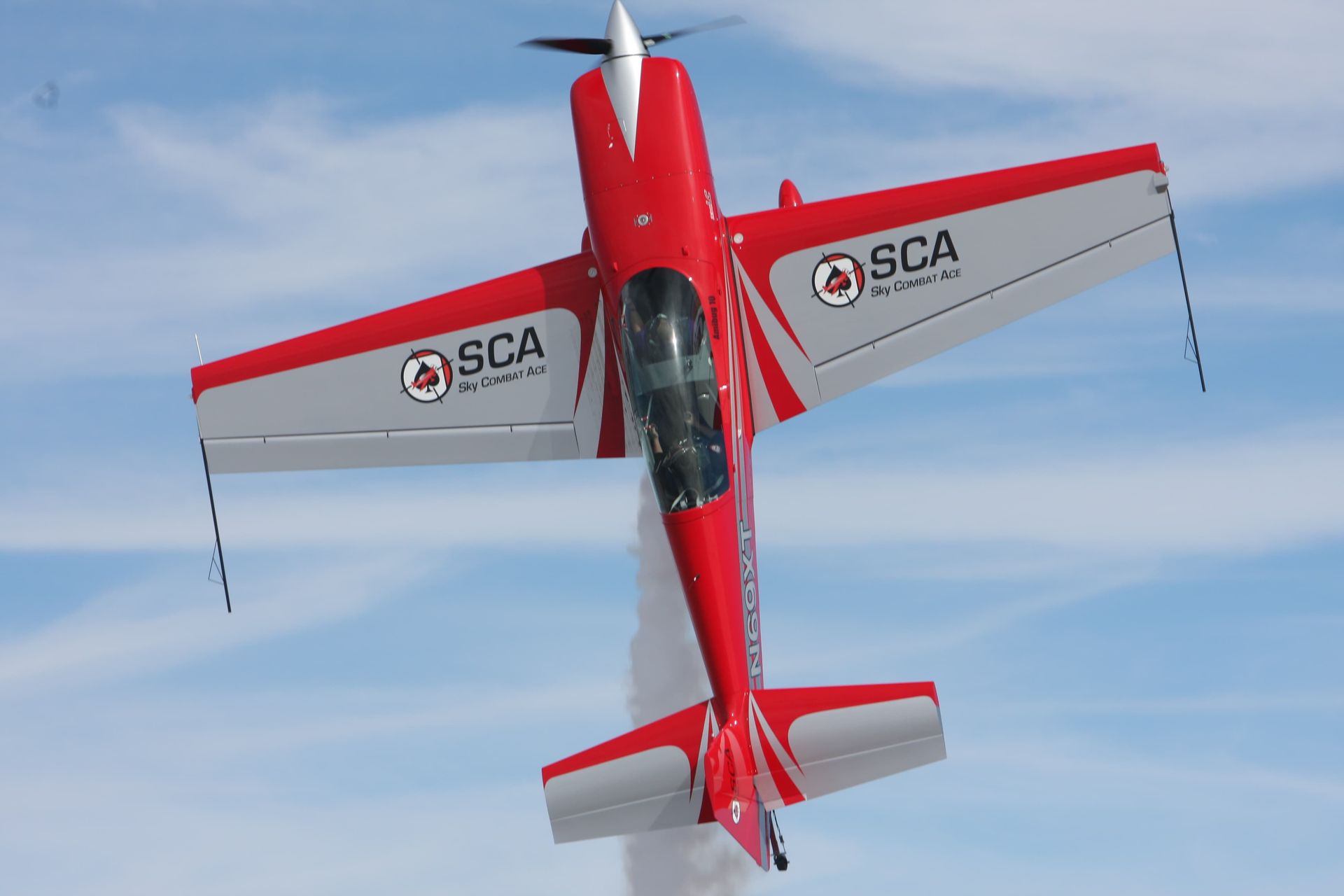
A flat spin resists all of this, because the nearly level attitude starves the rudder and elevator of airflow. That is why it killed in the F-14 and why it demands respect even in aircraft built for it. And some aircraft truly are built for it: purpose-built aerobatic planes like the one we fly are certified for intentional spins, loaded with the center of gravity exactly where it belongs, and flown by pilots who practice these maneuvers until recovery is muscle memory. In the right airplane with the right pilot, a spin is not an emergency. It is a maneuver, entered and exited on command, and one of the most disorienting, grin-inducing g-force experiences you can have in the sky.
Flat Spin FAQs
Is a flat spin survivable?It depends entirely on the aircraft. In a purpose-built aerobatic plane with proper weight and balance and a trained pilot, flat spins are flown intentionally and recovered routinely. In the F-14, the Navy's own manual told crews that reliable recovery had never been demonstrated and to eject without delay. |
Did a real crash inspire the Goose scene?No single documented F-14 accident has been identified as the inspiration, but the scene closely follows the Navy's published flat spin data and ejection guidance. The production did suffer a real flat spin tragedy: aerobatic legend Art Scholl died filming spin footage for the movie, which is dedicated to his memory. |
Can you experience a spin safely?Yes. On our aerobatic flights over Las Vegas, a veteran pilot can demonstrate controlled spins in an aircraft certified for them, and on the Afterburner you take the controls yourself for the rest of the ride. No license, no experience, just a working stomach. |
From Movie Scene to Real Sky
The flat spin in Top Gun endures because it is real physics with real stakes, not movie magic. If the scene made your palms sweat and some part of you still wanted to be in that cockpit, that is what we are here for. Book a flight and find out what controlled aerobatics feel like when the pilot next to you has done it a thousand times.
Sources:
- Wikipedia. Art Scholl. Retrieved 26 October 2026.
- Military.com. The Stunt Pilot Who Died Filming Top Gun. Retrieved 26 October 2026.
- Pilot Institute. What Is a Flat Spin?. Retrieved 26 October 2026.
- MiGFlug. Flat Spin: The F-14 Mode That Ends in Ejection. Retrieved 26 October 2026.
Check These Out Next:
Fly A Real Stunt Plane!
Sky Combat Ace was created by a U.S. Air Force veteran fighter pilot who wanted to make the thrill of flying fighter jets available to anyone who feels the need for speed.
Learn to fly a stunt plane under the supervision of our highly trained, FAA certified flight instructors. No experience necessary and YOU get to fly the plane!